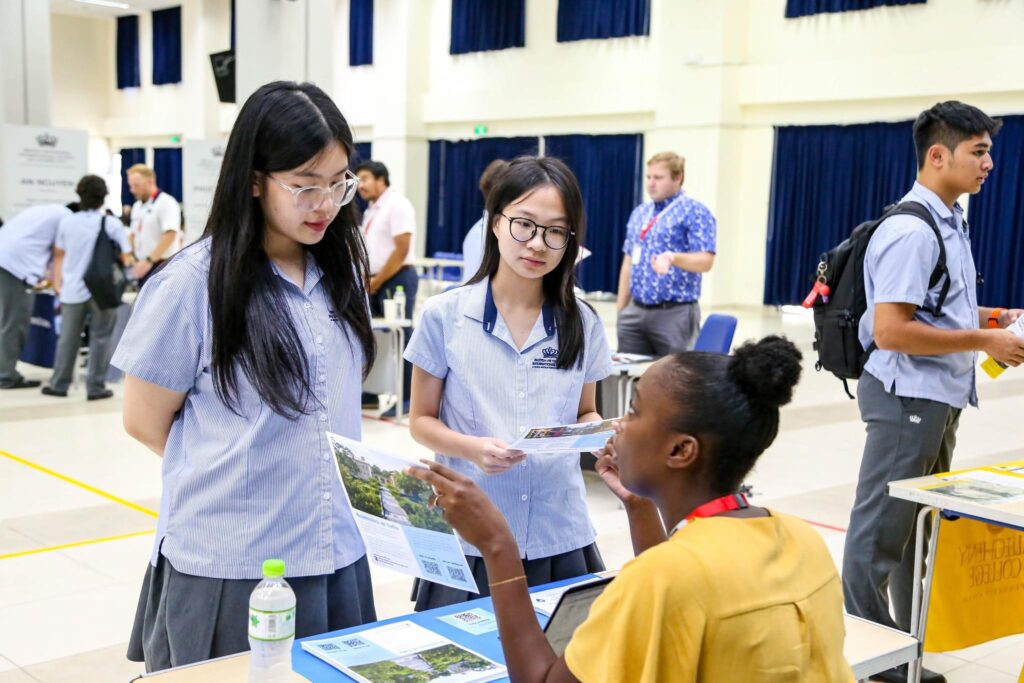
Low GPA but still want to study abroad? Discover 4 realistic pathways through flexible international schooling, U.S. diplomas, and alternative university options.
A Sample Journey Inspired by “Huyen” — A Student Who Regained Her Confidence and Opened International Opportunities
Many students with low GPAs believe that studying abroad is no longer possible for them. But in reality, grades are not always the final decision-maker.
A sample case study developed by FF Study — the journey of “Huyen,” a student who once struggled academically but later found a more suitable learning path — shows that your GPA does not define your future. What matters more is finding the right educational environment and rebuilding your direction.
“Huyen” — A Student Who Once Struggled Academically but Still Wanted a Global Future
Throughout middle school, Huyen’s academic performance remained below average.
Over time, she lost confidence and worried she would not be able to keep up with traditional high school programs. Her family was also concerned that her academic record would limit her chances of studying abroad in the future.
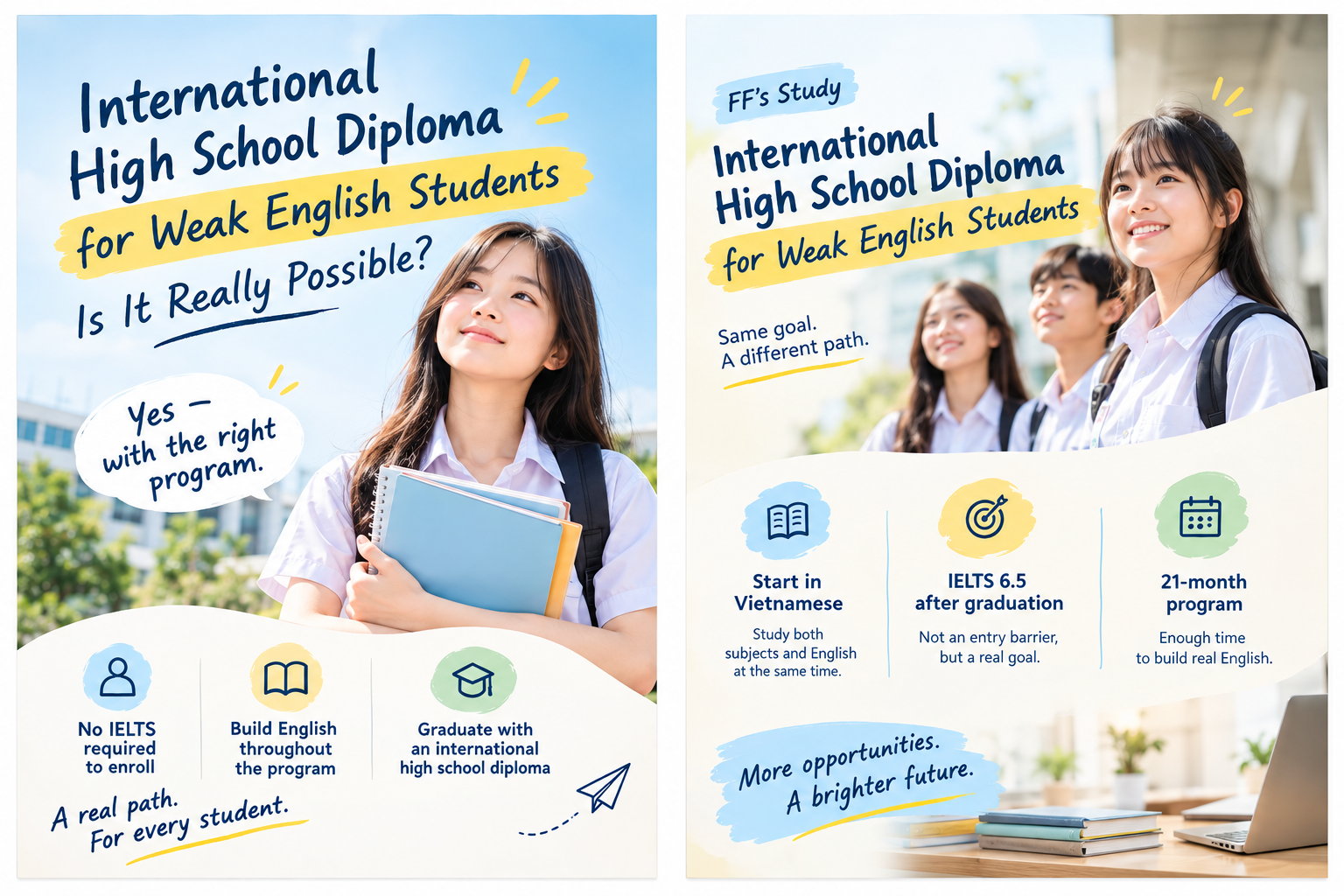
Things began to change when Huyen discovered FF Study – International Schooling, a flexible international high school program designed to help students learn differently through:
- Personalized learning pace
- An internationally recognized U.S. High School Diploma
- A more flexible environment for students who struggled in traditional systems
A Learning Path for Students with Low GPA Who Still Want to Study Abroad

🔹 1. Personalized Learning Pathway
FF Study is designed for students who need a more flexible academic route. Instead of forcing students into one standard pace, the program helps each learner rebuild motivation based on their own strengths, goals, and learning style.
This allowed Huyen to focus on improving weak areas without constantly comparing herself to others.
🔹 2. Project-Based Learning
Instead of relying only on memorization and exams, students participate in real-world projects such as:
- Presentations
- Research projects
- Creative problem-solving activities
- Idea development and teamwork
Through these experiences, Huyen gradually improved her communication, critical thinking, and problem-solving skills — all essential abilities for international education.
🔹 3. Flexible Study Schedule
Because the program is online and credit-based, students can study more flexibly and complete courses at their own pace.
Within approximately 1.5 years, Huyen completed her international high school program — a major turning point in her academic journey.
🔹 4. International Mentors and Academic Support
FF Study’s teachers and mentors continuously guided Huyen throughout the program, helping her:
- Develop better study habits
- Improve learning strategies
- Rebuild confidence in academics
- Maintain a more positive attitude toward learning
The Result: Early Graduation and Expanded Study Abroad Opportunities

After earning her international high school diploma, Huyen continued taking college-level courses equivalent to first-year university credits in the U.S.
This helped her:
- Reduce future university study time
- Save significant tuition costs
- Strengthen her study abroad applications
4 Possible Study Abroad Pathways After FF Study
Students who graduate from FF Study may pursue different international pathways depending on their goals and circumstances.
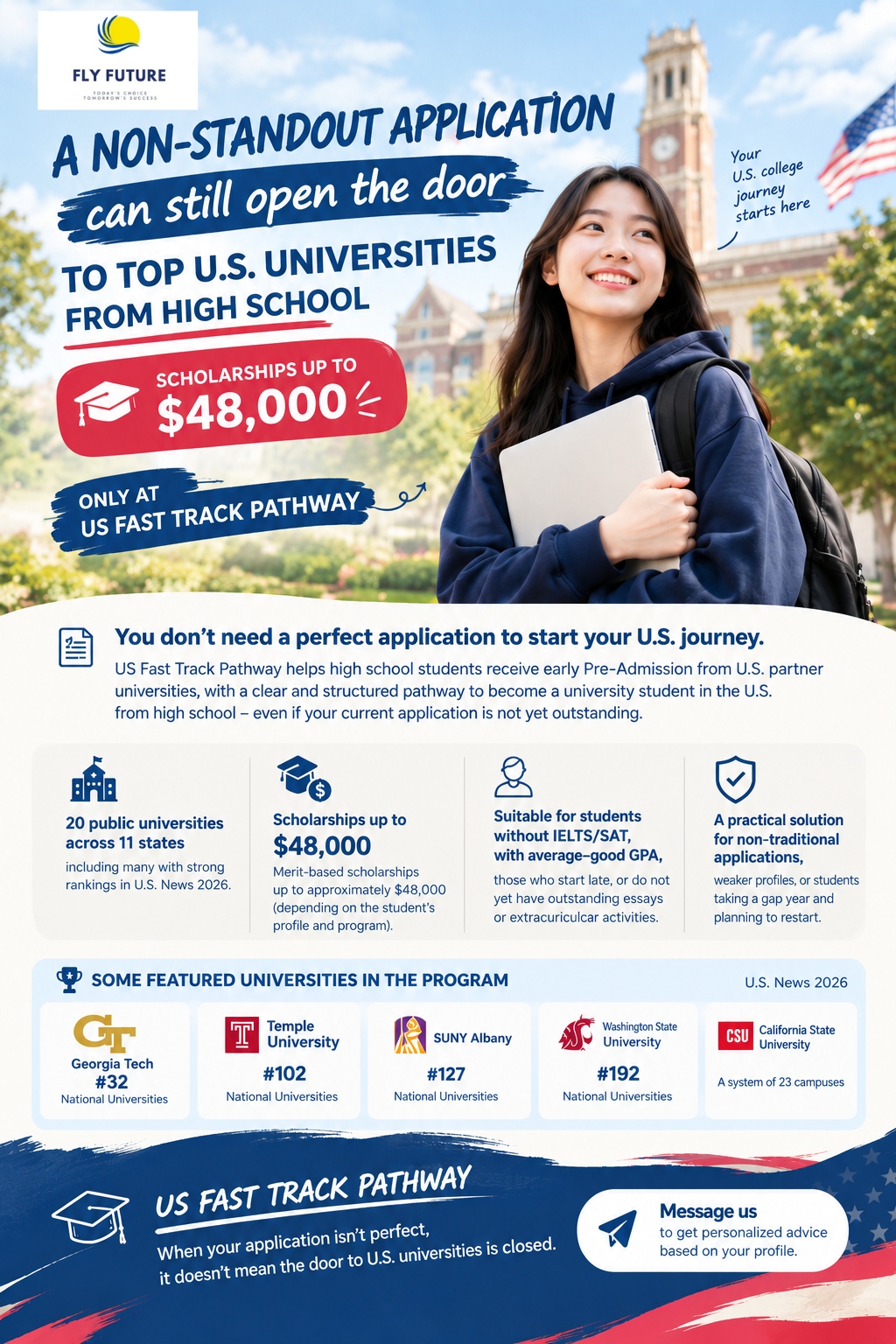
🇺🇸 Option A – Study in the United States
Students may transfer into universities such as:
- Temple University
- University at Albany
Potential advantages include:
- Saving up to one year of university study
- Lower overall tuition costs
- Faster pathway toward a bachelor’s degree
🇻🇳 Option B – International Universities in Vietnam
Students may continue their education at institutions such as:
- RMIT University Vietnam
- British University Vietnam
- FPT University
These universities offer:
- International degree programs
- English-speaking environments
- Student exchange opportunities
🇰🇷 Option C – Study in South Korea
Students may apply for English-taught programs in cities such as Seoul.
Benefits may include:
- Dynamic student life
- Modern educational environment
- More affordable living costs compared to some Western countries
🇩🇪 Option D – Study in Germany
Students may first enter a Studienkolleg (foundation year program) before progressing into public universities in Germany.
Advantages may include:
- Very low or nearly free tuition at public universities
- Strong academic reputation
- Opportunities for long-term career development in Europe
Why Students with Low GPA but Still Want to Study Abroad Need Flexible Pathways
✅ Internationally recognized U.S. High School Diploma
✅ Flexible and personalized learning structure
✅ Opportunity to graduate earlier (approximately 1.5–2 years)
✅ Ability to earn college credits during high school
✅ Study abroad guidance for the U.S., Korea, Germany, and more
A Message from FF Study
Huyen’s journey is only a sample illustration, but it reflects an important reality:
A low GPA does not automatically close the door to international education.
Sometimes students simply need:
- A different learning environment
- More flexibility
- Better guidance
- A chance to rebuild confidence
FF Study aims to help students:
- Regain motivation after academic struggles
- Develop practical real-world skills
- Explore international education and career opportunities
If you or your child are facing a similar situation, remember that there are always alternative pathways for students willing to start again.
Frequently Asked Questions
1. Can students with a low GPA still study abroad?
Yes. Many international programs focus not only on grades, but also on skills, motivation, personal growth, and alternative academic pathways.
2. What GPA is generally considered “low”?
This varies by country and institution, but typically:
- Below 2.5/4.0 GPA
- Or below approximately 65%–70% average
may be considered academically weak for competitive admissions.
3. What should students prepare if they have a low GPA but still want to study abroad?
Students are often encouraged to:
- Improve English proficiency
- Build extracurricular activities or portfolios
- Develop practical skills
- Join supportive academic pathways such as flexible international schooling programs
Important Note
“Huyen” is a fictional sample case created for illustrative purposes only.
The story is intended to help students and parents better understand how flexible international schooling pathways may support students with lower academic performance.
Individual academic outcomes and study abroad opportunities may vary depending on each student’s situation.
Contact Information
Interested in learning more about FF Study’s accelerated international high school pathway?
📩 Email: [email protected]
📞 Hotline: +84 35 482 1884
🌐 Website: Fly Future Education
FF Study — A low GPA is not the end of the journey. It can be the beginning of a new direction.